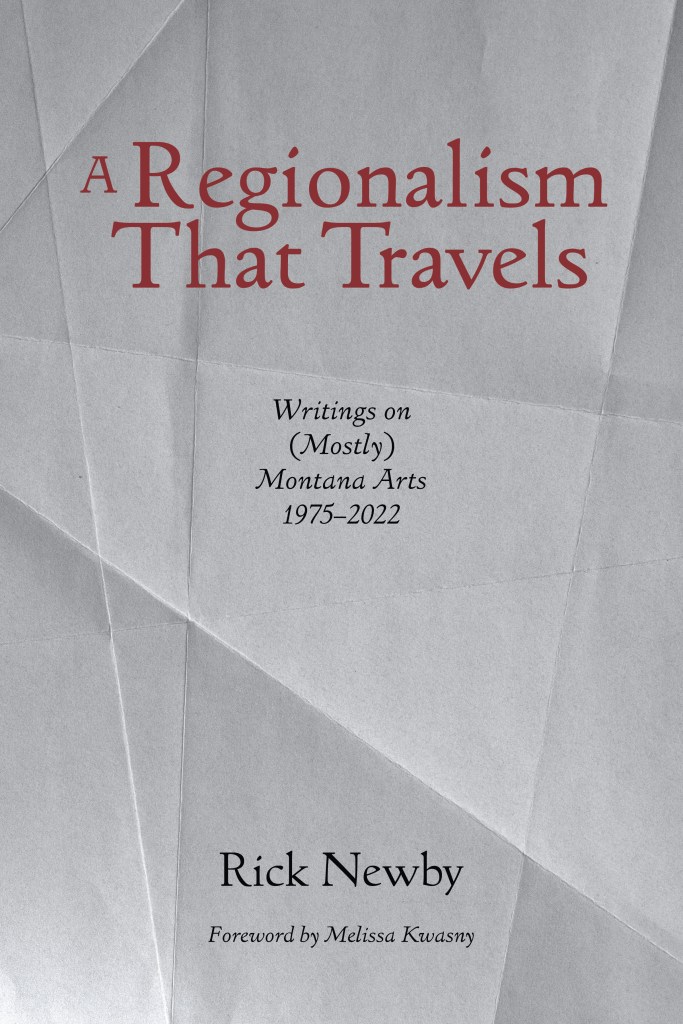
A Regionalism That Travels
Writings on (Mostly) Montana Arts, 1975-2022
by Rick Newby
Now Available! To purchase, go to Buy A Regionalism That Travels (this most directly supports our publisher Drumlummon Institute).
Also available from your local bookseller, alibris.com, Bookshop.org, Amazon, and other online booksellers. Booksellers & Libraries: A Regionalism That Travels is available through Ingram.
Drumlummon Institute, Helena, MT,
in association with Bar R Books
Softcover, 480 pages
Essays, $35
The first two reviews of A Regionalism That Travels have arrived! They are by Ken Egan, “Three New Ways of Looking at the American West” on Substack, and by Andrew Guschausky, “Rick Newby: Montana’s Regions of the Mind,” in the Montana Arts Council’s State of the Arts, Spring 2024, pp. 8-9
Drumlummon Institute announces the publication of a substantial volume of essays by Rick Newby, Drumlummon’s founding executive director and one of Montana’s leading writers, editors, and publishers. Entitled A Regionalism That Travels: Writings on (Mostly) Montana Arts, this collection gathers together Newby’s essays and reviews–spread over more than 40 years–on Montana’s writers and visual artists and the state’s cultural history.
The collection includes
- 18 essays and reviews on Montana literature, including Rick’s classic essay, “The Montana-Paris Axis, or Unpacking My Grandfather’s Library: On the Track of a Bookish Tradition”; a talk on the compiling of the critical anthology, Writing Montana; a monographic essay on the poetry of Roger Dunsmore; prefaces to the selected poems of twentieth-century Montana poets Frieda Fligelman and Grace Stone Coates; and a review of Debra Magpie Earling’s poetic version of The Lost Journals of Sacajewea.
- A section on the rise of modernism in the visual arts in Montana, including an appreciation of Isabelle Johnson and other early Montana modernists; an essay on the origins of the Archie Bray Foundation for the Ceramic Arts, researched and written with Chere Jiusto; an essay on the history of the Poindexter collections of American modernist paintings at the Montana Historical Society and the Yellowstone Art Museum; and a tribute to Miriam Sample, preeminent collector of contemporary Montana artists.
- Profiles of 15 ceramic artists who either live in Montana or have strong ties to the state. They are Chou, Pang-ling, Rudy Autio, Akio Takamori, Adrian Arleo, Robert Harrison, Beth Lo, Bobby Silverman, Jason Walker, Richard Notkin, Tom Rippon, George McCauley, Richard Swanson, Chris Staley, Stephen Braun, & Rebecca Hutchinson.
- A section entitled “Ceramic Globalism,” ranging over some pretty diverse terrain: the rise of Funk ceramics in California; the individual genius of Berkeley sculptor Stephen De Staebler; the collision of the earthy ceramic arts with the digital world; the role of perforation in contemporary ceramic practice; two iconoclastic clay artists from Philadelphia and the Bay Area; the remarkable Nigerian-British sculptor Lawson Oyekan; and the impact of teaware traditionally made in Yixing, China, on a wide range of contemporary American ceramists.
- And a section on a diverse group of Montana painters, printmakers, and non-ceramic sculptors. These include Anne Appleby, Dale Livezey, Michael Haykin, Doug Turman, Peter Koch, Griff Williams, Paul Harris, Patricia Forsberg, Jim Todd, Gordon McConnell, Sandra Dal Poggetto, Richard Swanson Joseph Baraz, and Barry Hood.
Margaret Kingsland, Executive Director, Montana Committee for the Humanities, 1974–1995, says of A Regionalism That Travels:
“If you want to understand the creative artists of today’s Montana, read this book! Rick Newby, one of Montana’s most insightful critics, guides us to a deeper understanding of the joys, relationships, challenges, and achievements of contemporary Montana writers, artists, collectors, and arts centers. Drawn from his years of passionate engagement with Montana art and literature, these selected essays illuminate the creative spirits and communities which continue to enliven our state and region.”
* * *
Gordon McConnell, painter, curator, critic, and recipient of the 2020 Montana Governor’s Award for the Arts, writes:
“For the past forty years, Rick Newby’s perceptive and scrupulously researched writings on the cultural history, art and literature of Montana have guided my reading, informed my thinking and fortified me in my own advocacy for the most progressive and “well traveled” contemporary artists of the region. His writings are lyrical, elegant, deeply insightful and suffused with a constructive and benevolent spirit. The cultural terrain he has examined is vast, and we know it better for his untiring attention. Incrementally, in many diverse and scattered essays, articles, talks and reviews, Rick Newby has mapped our cultural geography. This invaluable volume, collecting many of his most significant writings, is his atlas, and ours.”
* * *
Ken Egan, Jr., author of Hope and Dread in Montana Literature and Montana 1864, writes:
“Creativity in all its forms calls to Rick Newby. He revels in original writing and visual arts from his beloved Montana. In the process he uncovers shadow traditions that defy stereotypes about the American West. Whether it’s an irreverent surrealist movement, or a gifted poet living on an isolated ranch, or a Chinese American ceramics artist, or a painter combining Modernism with immersion in his home place, Newby asks us to pay attention to makers who live out cosmopolitan regionalism. Through these artful, spirited essays, he discloses a far more uncanny and diverse place than one might at first suppose. At a time when some call for a homogenized culture, Newby reminds us of the exuberance of a dynamic provincialism. I for one would not want to live in a place without the insights and eccentrics of Rick Newby’s wonderful book.”
* * *
In her foreword to A Regionalism That Travels, Melissa Kwasny–Montana’s Poet Laureate in 2019-2021 (together with M. L. Smoker)–writes:
“Poet. Essayist. Critic. Publisher. An old-fashioned public intellectual in the tradition of John Berger, Guy Davenport, and Rebecca Solnit. If you have been in Montana more than a few years, your knowledge of our arts and culture most likely comes from something Rick [Newby] wrote, edited, or published, something he said publicly in a lecture or privately in a conversation, from a reading he sponsored or jazz he gave a stage to. For Rick, besides being a writer – the author of five books of poetry, over fifty catalogs, essays, and monographs on visual artists . . . – is a celebrant, a tireless promoter of the work of others, and a generous sharer of enthusiasms.“
Melissa continues:
“Rick [has] sought to broaden and analyze assumptions about the state’s literary and artistic canon by opening the field to those working in Eastern Montana, on ranches and smaller cities, to the lesser known, the overlooked, the undiscovered. He has championed the work of indigenous, gay, and, in particular, women writers. Bedrock to these endeavors is a philosophy of regionalism developed thoughtfully over many years, what he calls a “new provincialism,” defined as the state of living far from urban centers of culture yet being open to, and searching out, new ideas from them, while at the same time paying strenuous attention to what is happening in one’s backyard. Eager to move beyond a merely scenic and over-romanticized depiction of the West, with its often-underlying anti-intellectualism, Rick re-imagines Montana as a site of diverse perspectives and experiences. Through his many contributions and achievements – he has been awarded both the Governor’s Award for the Arts and the Governor’s Award for the Humanities – his work complicates, as well as contextualizes, our sense of where we live.
“A Regionalism That Travels is an apt title for this collection of essays. A regionalism that travels does exactly that, it travels – physically and imaginatively, on horseback and planes, through books and time, from international museums to ramshackle studios on ranches and galleries on the outskirts of our small towns. It is a regionalism that is enriched by the innovations of the larger world and, in turn, contributes its fair share of riches to it. “It has been my great pleasure to spend my life among artists: poets, storytellers, and novelists, painters and photographers, printmakers, book artists, and sculptors,” Rick Newby writes in the introduction to this valuable archive, one I envision will take its place in courses in Montana studies, and on the shelves of many libraries, civic and personal, for generations to come.”
* * *
Daniel Biehl, Montana printmaker and sculptor, writes:
“Rick Newby and Drumlummon Institute are engaging Montanans in eloquent and insightful discussions on the art and artists of our time and region. Nothing is needed more right now for a popular appreciation of contemporary art than such a development of ideas and vocabulary.”
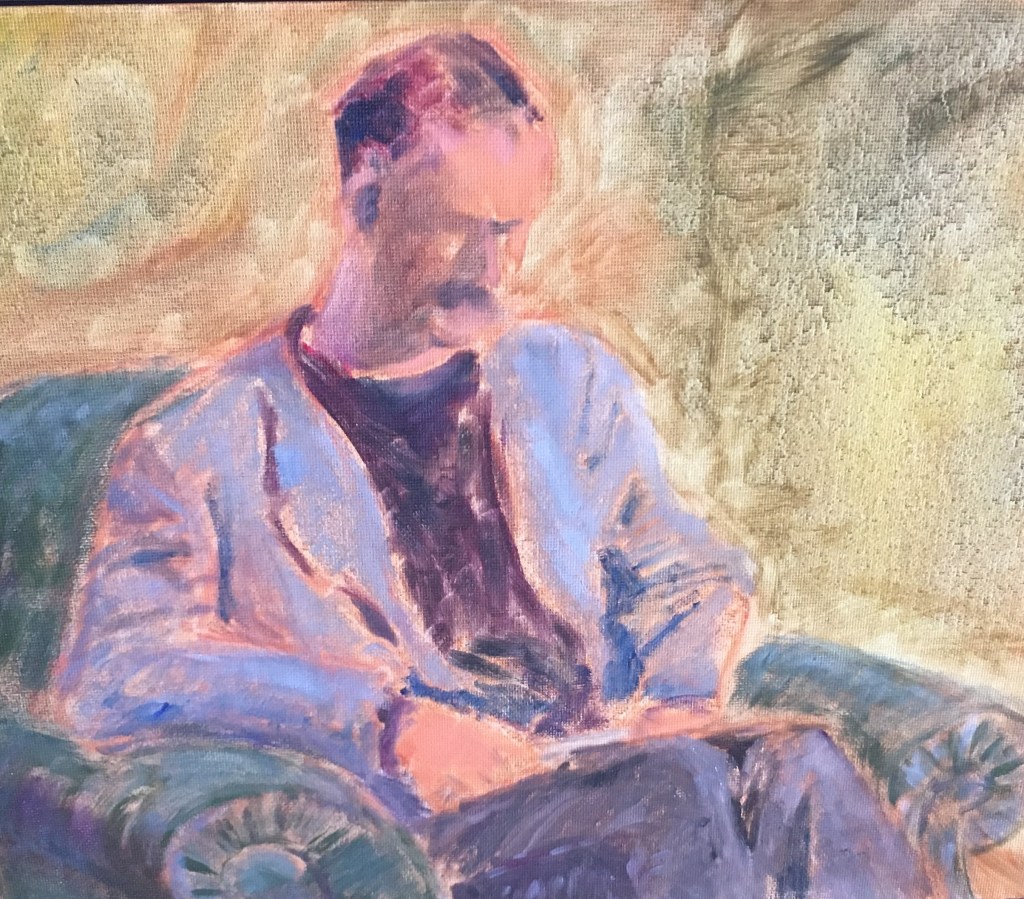
Rick Newby Reading (after Fra Dana), by Liz Gans, oil on board, 1999
“I use the word “bookishness” frequently in this book; it is a quality I cherish because it signifies a fierce openness to all manner of cultural differences, forms of knowledge, and ways of being.”
Rick Newby, from the introduction
* * *
Praise for earlier books by Rick Newby:
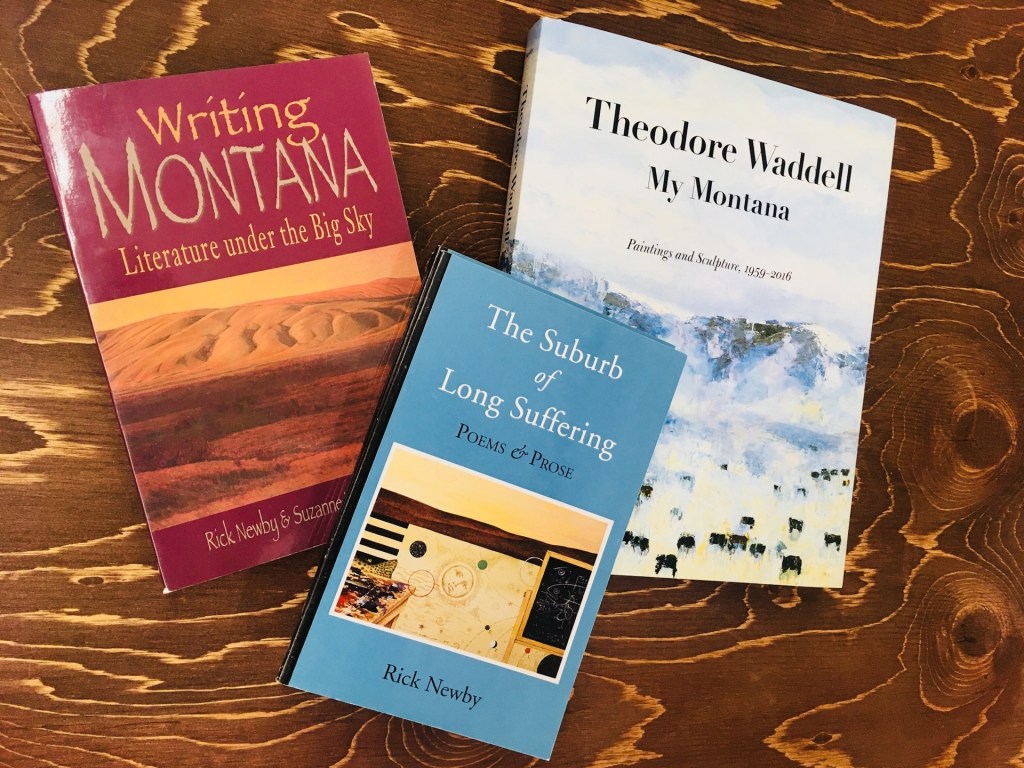
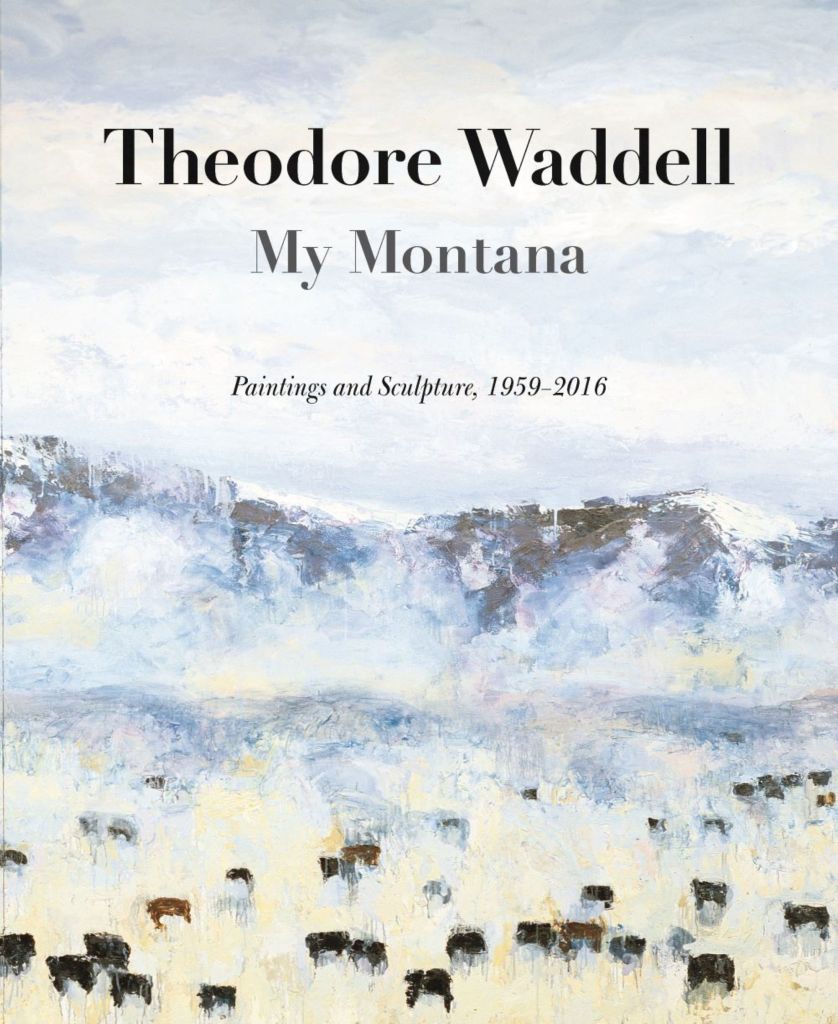
“Rick Newby’s Theodore Waddell—My Montana: Paintings and Sculpture, 1959-2016 is not a typical art book, but then again, its subject is not a typical artist. Neither artist biography, art criticism, nor catalogue raisonne, Newby’s work interweaves elements of each, crafting a serious, yet intimate, and often humorous, portrait of a Montana artist as singular as the book itself. . . . . Although a biographical homage to one of Montana’s most renowned artists, Newby’s book also contributes to a growing body of scholarship examining the history of modernism in the West . . . this book is a literary gem.”
Patricia Vettel-Becker, Montana the Magazine of Western History, Winter 2017
“For Big Sky Journal, the new consideration of the life and work of Ted Waddell by Rick Newby is one of the most significant publishing occasions of the year.”
Corinne Garcia, Big Sky Journal, Art Issue, 2017
* * *
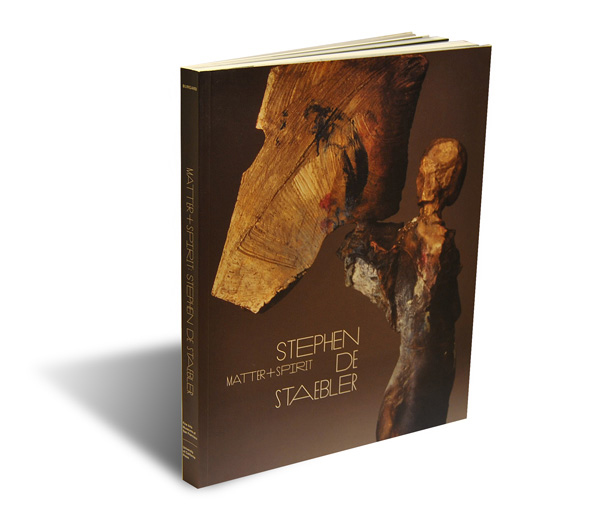
“An excellent catalogue [for the exhibition, Matter + Spirit: Stephen De Staebler, at San Francisco’s De Young Museum], edited by the show’s curator, Timothy Anglin Burgard, features gracefully written, illuminating essays by critics Rick Newby and Dore Ashton that provide esthetic, historical and psychological perspective into the man and his art.”
DeWitt Cheng, Huffington Post, March 2012
The layered artistic message proffered by [Stephen] De Staebler and his work is not always interpreted well by others. {Rick] Newby, however, discusses both DeStaebler’s sculptural accomplishments and spiritual universalities in a gracious manner that is a tribute to the artist. He skillfully translates the essence of De Staebler’s work into this accessible text, presenting both the anguish but also the vitality of De Staebler’s work.”
Nancy M. Servis, Ceramics: Art & Perception, 2013
* * *
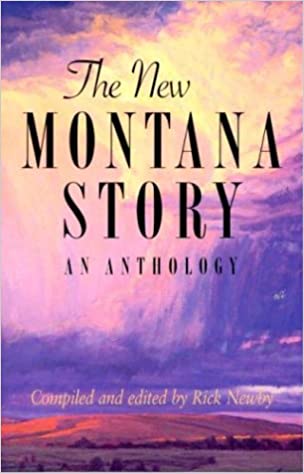
“Poet and editor Rick Newby’s collection The New Montana Story surveys what he labels ‘the third generation of modern Montana storytellers” and handsomely attests to [the] aptness of the Big Sky’s robust literary reputation. . . . Anyone interested in the Montana literary scene must make a place for this worthy descendant of The Last Best Place. With this smorgasbord, we know literature thrives under the Big Sky.”
O. Alan Weltzien, Montana the Magazine of Western History, Spring 2004
* * *
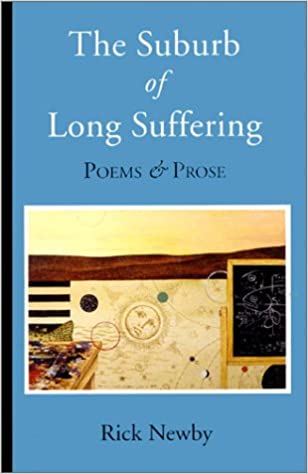
“Rick Newby practices a sly, elegiac, thoroughly post-Modernist (by which I mean his sensibility has been woven and charged with the work of the modernists: painters as well as poets, and Europeans as well as Anglo-Americans) poetics that charms, pricks, and delights me. . . .The most remarkable work in [The Suburb of Long Suffering] is the title poem, which is among other things a pastoral meditation. . . . The poem’s melancholy pleasures seem to me to come close to that synthesis of social formalism—the thinking-through-fragmentation of the contested place of subjectivity—and the poetics informed by myth that I have given the unsatisfactory and tentative name of wisdom poetry..”
Joshua Corey, co-editor, The Arcadia Project: North American Postmodern Pastoral
 Rick Newby, Writer & Editor